




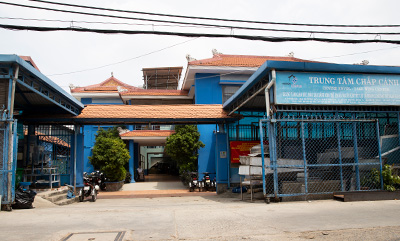
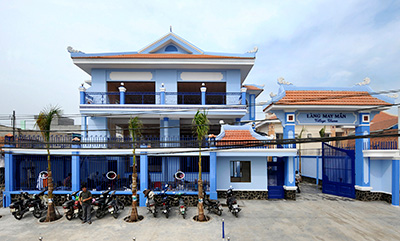





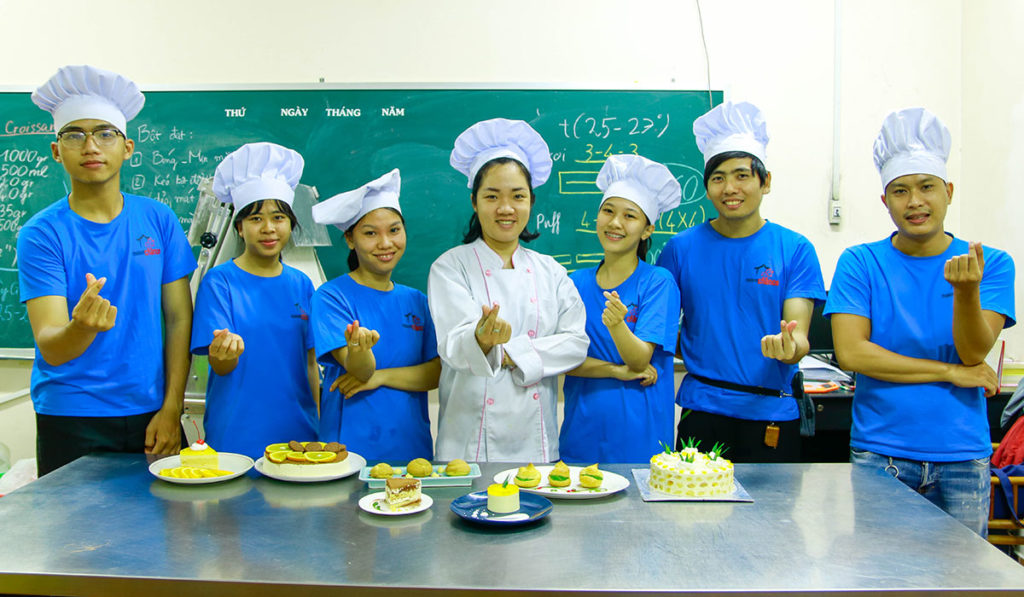
Inaugurated on February 18, 2006, the Take Wing Center spans 1,200 m² and features a two-story U-shaped structure with rooms surrounding a central hall. The facility was specially designed for people with disabilities, incorporating ramps and fully accessible pathways that enable wheelchair users to navigate seamlessly between floors throughout the building.
The center provides trainees with vocational courses tailored to their abilities and physical conditions, enabling them to gain practical experience and build the foundation needed for successful reintegration into the community.
In addition to its training and production activities, the Take Wing Center also functions as the central administrative hub of Maison Chance, where operations are managed, projects are coordinated, and visitors and partners are received.
PAINTING WORKSHOP
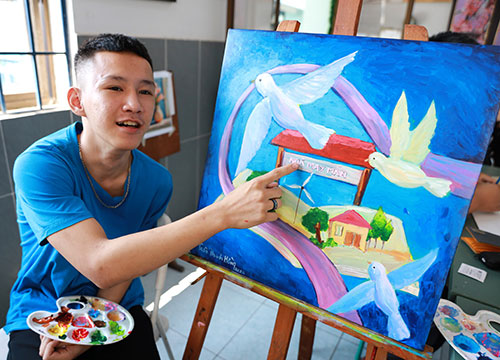
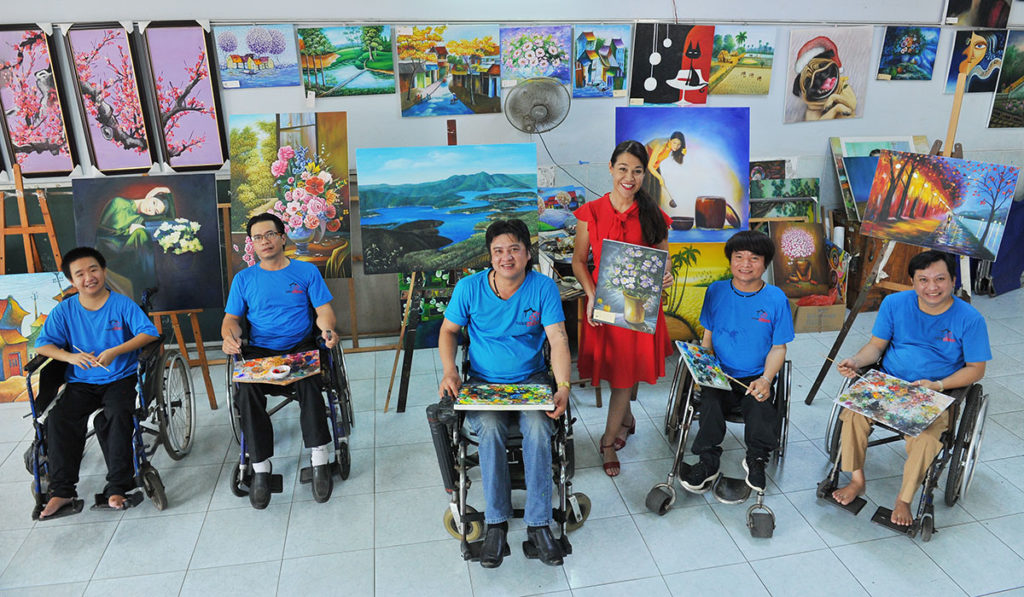
Originally, the painting workshop was created as a space where trainees could express their emotions and share their personal stories through art. Over time, it has evolved into a structured vocational program, offering learning opportunities and skill development for beneficiaries at Maison Chance.
Trainees begin with fundamental painting techniques before gradually progressing to oil painting, including original creations, reproductions, portraits, greeting cards, and customized artwork. To stay aligned with contemporary art trends, the workshop has also introduced 3D Resin Epoxy art classes, allowing trainees to explore new techniques, unleash their creativity, and expand their career prospects in the field of visual arts.
Sewing & Embroidery Workshop
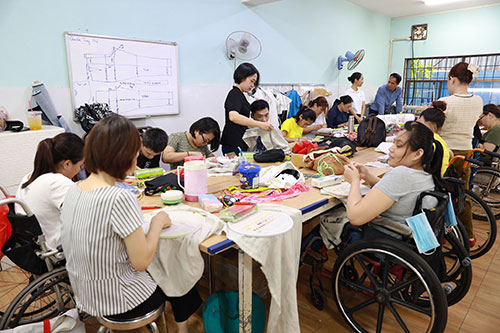
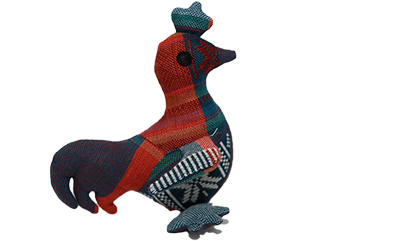
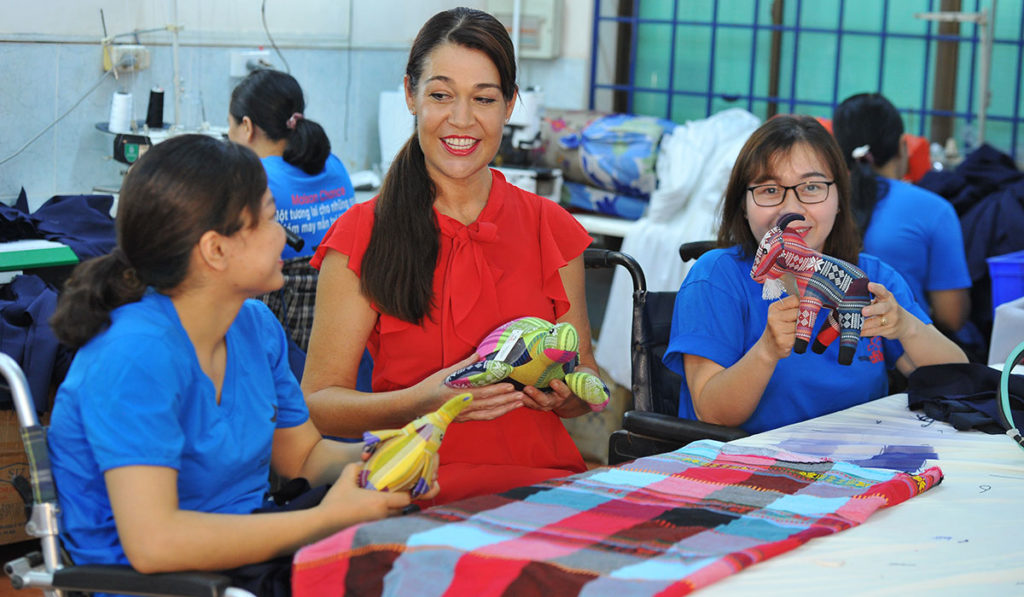
Trainees in the sewing workshop receive comprehensive training, from basic to advanced techniques, enabling them to complete the entire production process from start to finish. They create a wide variety of products—including stuffed animals, coasters, clothing, tote bags, keychains, and more—bringing practical value as well as a deep sense of pride when seeing products crafted by their own hands.
To accommodate trainees with diverse physical abilities, the sewing machines are specially adjusted for those who operate them using their elbows or without the use of their legs, ensuring that everyone can work efficiently.
To meet the diverse needs of orders and expand their skill sets, trainees are also introduced to additional techniques such as hand embroidery, opening new opportunities for craftsmanship and creativity in each product.
IT WORKSHOP
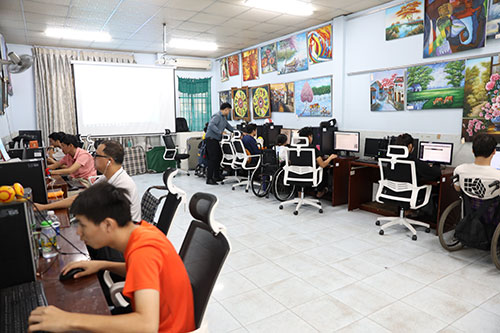
For individuals with severe mobility impairments, using their hands or moving around frequently is often impossible. As a result, information technology becomes a more practical option than any other vocational field. With a computer screen, assistive mouse devices, and specialized equipment, they can learn, create, and communicate without needing to leave their workspace.
The IT program is structured step by step. Trainees begin by learning basic computer skills, then progress to design software such as Photoshop and Illustrator, before advancing to website creation using WordPress—an essential skill that enables them to take on real-world tasks and freelance projects.
With these skills, several trainees have secured employment either externally or continued working at the Take Wing Center after graduation. This opens up new opportunities—where technology becomes a bridge for integration, independence, and self-empowerment.
Stone Carving Workshop
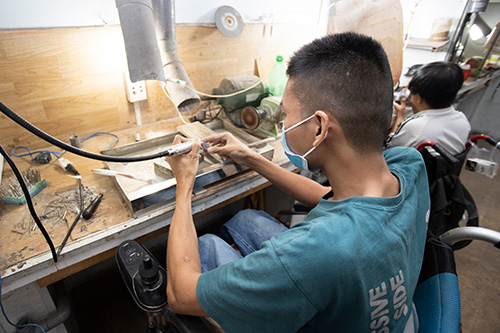
The art of gemstone carving from selecting raw stones to cutting, shaping, and polishing is a meticulous craft that transforms rough materials into refined artwork or high-value jewelry. It demands precision, artistic sensitivity, and exceptional manual dexterity.
This vocation is particularly suitable for wheelchair users, as all tasks can be performed entirely while seated, making it highly accessible for individuals with strong upper-body mobility. Through this program, many beneficiaries have the opportunity to discover their artistic talents, cultivate patience, and create unique, personalized pieces that reflect their creativity and identity.